


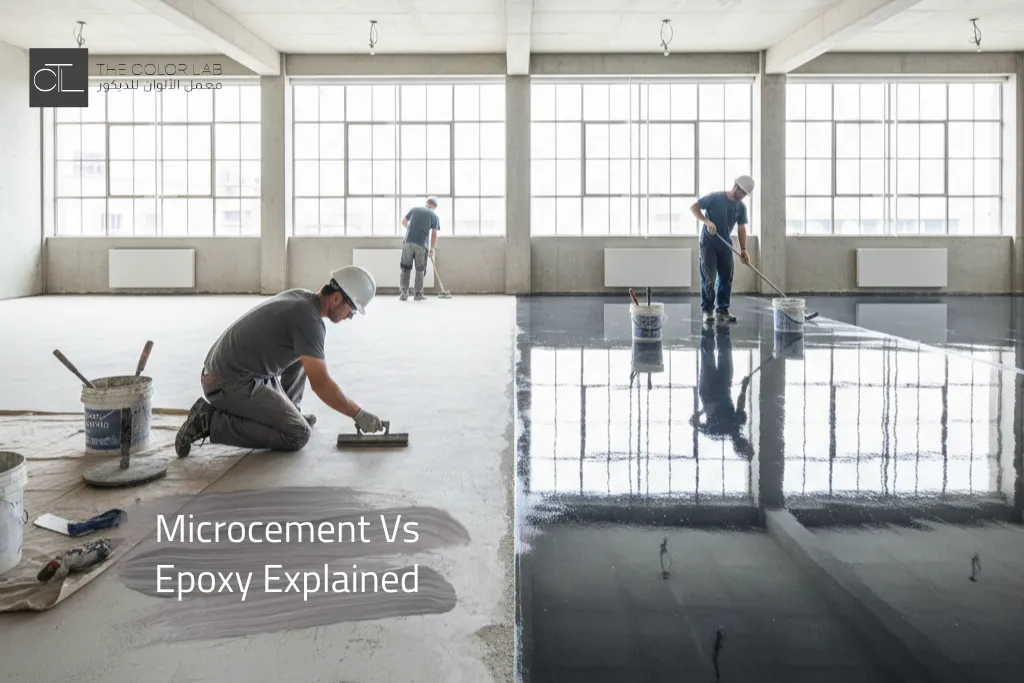
Microcement vs Epoxy: Choosing the Right Flooring Solution for Modern Luxury Spaces
Why Comparing Microcement vs Epoxy Matters
In today’s premium residential and commercial environments, flooring is no longer just a surface, it is a design statement and a performance system. The discussion around microcement vs epoxy has become increasingly relevant for architects, designers, and developers seeking modern flooring solutions that balance aesthetics with durability.
At The Color Lab, we approach every microcement vs epoxy comparison strategically. Whether the project involves interior flooring materials, seamless floors walls applications, or industrial flooring options, understanding performance, maintenance, and visual identity is critical. Choosing between microcement flooring and epoxy flooring affects flooring durability, wear resistance, and long-term value especially in high traffic areas and refined commercial settings.
If you’re evaluating options for your next project, you can [Explore our microcement flooring services] to see how we integrate performance with design excellence.
What Is Microcement?
Microcement is a cement based, polymer modified decorative coating applied in thin layers over existing substrates. It creates a continuous surface with no joints, making it ideal for seamless flooring and modern architectural concepts.
Unlike traditional decorative concrete coatings, microcement flooring offers exceptional design flexibility. It can be applied on floors walls, bathrooms, kitchens, and even furniture, creating custom floor finishes tailored to each project.
A refined microcement finish provides:
- Thin layers with minimal structural impact.
- Waterproof flooring solutions when sealed properly.
- A continuous surface without grout lines
- A highly resistant topcoat against everyday wear.
- A system that requires simple maintenance.
At The Color Lab, our micro cement suppliers work with advanced formulations to ensure flooring durability without compromising aesthetics. Compared to a polished concrete floor, microcement offers more versatility in texture and tone, especially in premium interiors.
To discover more about textures and applications, you can learn more about microcement finishes through our expert team.
What Is Epoxy Flooring?
Epoxy flooring is a resin-based system composed primarily of epoxy resin and hardeners. Once cured, it forms a highly resistant, seamless layer commonly used in commercial and industrial flooring options.
An epoxy resin coating delivers:
- High gloss or high-gloss finishes.
- Strong resistance to harsh chemicals.
- Seamless resin floors.
- High-performance flooring durability.
- Excellent wear resistance.
Epoxy flooring is particularly suitable for high traffic areas such as warehouses, showrooms, and industrial facilities. In commercial settings, it is valued for its strength and chemical resistance.
However, when comparing microcement vs epoxy, epoxy resin systems tend to prioritize performance over subtle aesthetic nuance. While they provide durable floor solutions, their glossy finish may not align with certain luxury interior design visions.
You can explore our epoxy flooring solutions to understand how The Color Lab engineers resin flooring systems tailored to each project.
Microcement vs Epoxy – Key Differences
A proper microcement vs epoxy comparison must examine material composition, thickness, resistance, and visual identity.
Material Type
Microcement is cement based and mineral-driven. Epoxy flooring relies on resin-based coatings and epoxy resin chemistry.
Thickness & Application
Microcement flooring uses thin layers applied over existing surfaces. Epoxy resin coating systems are thicker and often require substrate preparation and moisture barrier solutions.
Durability & Resistance
When discussing microcement vs epoxy, epoxy is more resistant to chemicals and harsh industrial exposure. Microcement, while highly resistant, is better suited for refined environments rather than heavy chemical processing zones.
Design & Finish
Microcement finish delivers matte, textured elegance and architectural depth. Epoxy flooring offers a glossy finish or high gloss effect, ideal for modern commercial flooring options.
Maintenance
Microcement requires simple cleaning routines and periodic resealing. Epoxy flooring systems are durable but may require specialized care in case of deep scratches.
Choosing between microcement vs epoxy ultimately depends on whether your project prioritizes design flexibility or chemical resistance and industrial-grade performance.
For a deeper technical breakdown, you can compare microcement and epoxy flooring options with our specialists.
Performance in Climate & Environmental Conditions
In regions with high temperatures and humidity fluctuations, environmental performance becomes a decisive factor when selecting high-performance flooring. Thermal expansion, surface stability, and UV exposure all influence long-term flooring durability.
Cement-based systems like microcement offer excellent adaptability to substrate movement and temperature variation, making them suitable for residential interiors and semi-covered outdoor transitions. When sealed correctly, they contribute to waterproof flooring solutions while maintaining a natural, breathable finish.
On the other hand, resin-based coatings such as epoxy perform exceptionally well in controlled commercial settings where climate conditions are stable. However, in environments exposed to direct sunlight, certain formulations may require UV-stable topcoats to prevent discoloration over time.
For projects in Saudi Arabia, where heat and humidity can challenge interior flooring materials, selecting the appropriate system ensures structural stability, surface longevity, and sustained aesthetic value.
Advantages & Ideal Use Cases
When analyzing microcement vs epoxy, context matters.
Microcement Advantages
- Seamless flooring with custom floor finishes
- Elegant textures suitable for premium interiors
- Cement based thin layers over existing tiles
- Ideal for residential spaces, boutique retail, hospitality
- Integrates beautifully with Clay plaster solutions and Lime plaster wall finishes
Microcement flooring complements sophisticated interiors where material harmony matters.
Epoxy Advantages
- High-performance flooring
- Resistant to chemicals and mechanical stress
- Durable floor solutions for factories and garages
- Suitable for industrial flooring options and heavy-duty applications
In projects where epoxy resin flooring cost is justified by long-term industrial usage, epoxy becomes a strategic investment.
Understanding microcement vs epoxy ensures the right system aligns with the project’s purpose.
Installation & Maintenance Comparison
Both systems provide seamless flooring, yet installation techniques differ significantly.
Microcement flooring installation:
- Applied in controlled thin layers
- Requires skilled craftsmanship
- Minimal demolition
- Continuous surface application
Epoxy flooring installation:
- Requires surface grinding
- Application of epoxy resin coating
- Moisture barrier assessment
- Resin flooring curing time
When comparing microcement vs epoxy, installation precision directly impacts flooring durability. At The Color Lab, our specialists oversee every phase to ensure surface preparation, leveling, and curing meet luxury standards.
For more insight, you can learn more about our flooring installation techniques and see how our team executes high-performance flooring systems.
Beyond installation techniques, long-term maintenance cycles also influence decision-making. Microcement surfaces can be refreshed through resealing, extending their lifecycle without full replacement. Minor surface imperfections can often be repaired locally while preserving the continuous surface appearance.
Epoxy flooring, while extremely durable, may require more technical intervention if deep scratches or delamination occur. In commercial settings, downtime for repairs should be factored into operational planning. Choosing the right system involves evaluating cleaning routines, expected wear patterns, and future renovation flexibility.
Cost & Value Considerations
Cost is a decisive factor in the microcement vs epoxy debate.
Microcement flooring is often cost effective for design-driven projects because:
- It avoids full floor removal
- Uses thin layers
- Reduces structural changes
Epoxy resin coating systems may have higher upfront costs depending on thickness and industrial specifications, but they provide unmatched wear resistance in demanding environments.
When evaluating epoxy resin flooring cost versus microcement systems, project scope and lifecycle expectations must be considered. A boutique showroom may benefit more from microcement’s aesthetic versatility, while a warehouse demands epoxy’s structural resilience.
At The Color Lab, we assess flooring materials comparison data carefully before recommending a system.
To evaluate ROI for your project, you can Request a flooring consultation directly from our team.
When analyzing investment value, it is essential to differentiate between upfront installation cost and lifecycle performance. A surface that appears cost effective initially may incur higher long-term maintenance or replacement expenses.
Final Verdict: Microcement vs Epoxy for Your Next Project
The decision between microcement vs epoxy is not about which material is superior, it is about which is appropriate.
Microcement flooring delivers refined, continuous surfaces that enhance modern flooring solutions and luxury interiors. Epoxy flooring provides robust resin floors engineered for industrial strength.
In Saudi Arabia’s evolving architectural landscape, selecting the right high-performance flooring requires both technical knowledge and design sensitivity. The Color Lab combines both.
If you are currently assessing microcement vs epoxy for residential, hospitality, or commercial flooring options, our team is ready to guide you through specifications, samples, and performance evaluation.
Contact us today to schedule a consultation for microcement or epoxy flooring and let The Color Lab design a flooring solution that merges elegance, durability, and long-term value.