


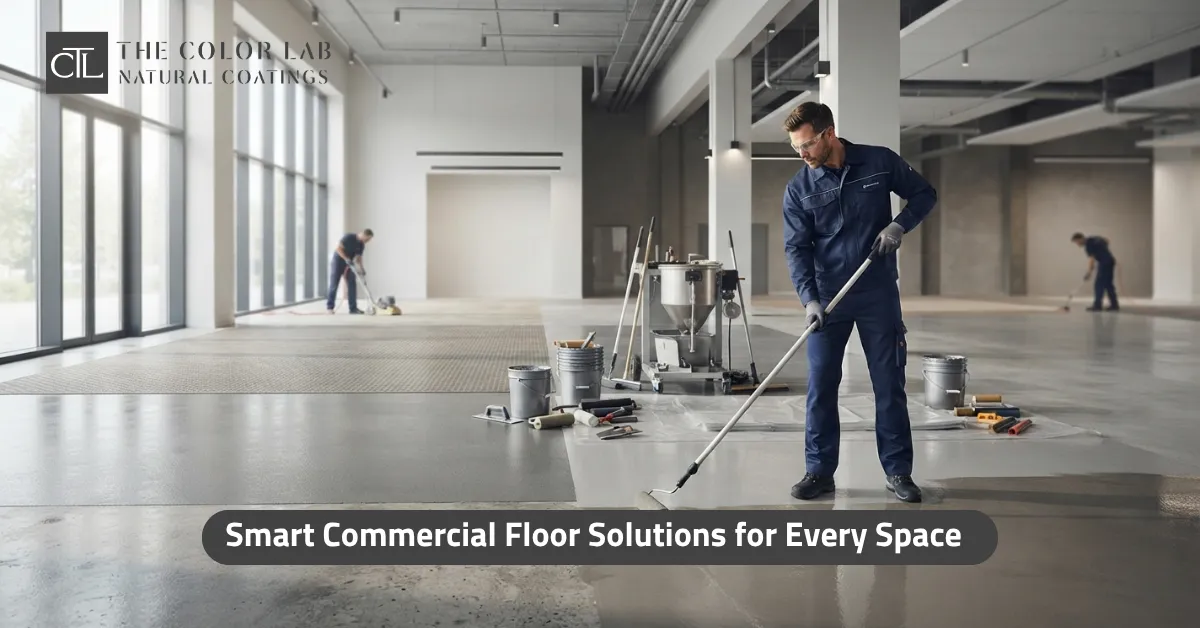
Commercial Floor Solutions: Choosing the Right Flooring for Commercial Spaces
A commercial floor does more than complete an interior.
It supports daily movement, influences first impressions, and has to perform long after the project is handed over.
That is why choosing commercial floor solutions is not simply about selecting an attractive material. The right flooring needs to respond to traffic levels, maintenance routines, safety requirements, durability, and the overall design vision.
From sophisticated offices and luxury hotels to retail spaces, restaurants, showrooms, and service environments, every project has its own demands.
The goal is to find the right balance between performance and design, a surface that works hard while looking effortlessly considered.
What Are Commercial Floor Solutions?
commercial floor solutions include flooring systems, materials, and finishes developed for environments where performance and appearance need to work together. Unlike residential flooring, commercial flooring often faces higher footfall, wheeled traffic, frequent cleaning, equipment, spills, and longer operating hours.
Depending on the space, commercial flooring systems may need to address:
- Traffic and expected wear.
- Moisture and environmental exposure.
- Cleaning and maintenance requirements.
- Safety and slip resistance.
- Chemical or stain exposure.
- Aesthetic and architectural requirements.
- Long-term durability.
Ultimately, the right commercial floor finishes should support both the practical function of the space and the design language created by the architect or interior designer.
What Should You Consider When Choosing Commercial Flooring?
There is no universal flooring specification for every commercial project. Before choosing a material, it is important to understand how the space will actually be used.
Traffic and Usage
Traffic is one of the first factors to assess. Offices, retail stores, hotel lobbies, restaurants, and industrial areas can experience very different levels of daily movement.
A high-traffic flooring system may be required in busy public areas, while heavy-duty commercial flooring may be more appropriate where equipment, wheeled loads, or heavy furniture are involved.
Consider:
- Daily pedestrian traffic.
- Wheeled traffic and equipment.
- Furniture movement.
- Frequency of use.
- Expected wear over time.
This helps determine which durable commercial flooring option can deliver the right level of performance without compromising the project’s visual direction.
Maintenance Requirements
A commercial floor should also fit the maintenance routine of the business.
A low-maintenance flooring system can simplify everyday cleaning and help reduce the attention required to keep high-use areas looking presentable.
Consider:
- Cleaning frequency
- Stain and dirt exposure
- Ease of routine cleaning
- Repair requirements
- Expected long-term upkeep
Safety
Safety becomes particularly important in areas where water, food, or other substances may reach the floor.
Slip-resistant flooring can be an important consideration for kitchens, hospitality environments, public areas, entrances, and spaces exposed to spills.
Chemical and Environmental Exposure
Some commercial floor solutions face additional demands in demanding environments.
Kitchens, workshops, industrial areas, and service spaces may encounter oils, cleaning chemicals, food substances, or other materials during everyday operations.
In these settings, chemical-resistant flooring may be considered as part of the overall specification.
Types of Commercial Floor Solutions
There is no single flooring system that works for every commercial project. The right choice depends on the space, traffic, exposure, maintenance routine, and design direction.
Here are some of the most relevant options to consider:
Resin Flooring
Resin flooring is often selected for commercial environments that need a durable, continuous surface with a clean visual character.
Its key advantages can include:
- Seamless appearance.
- Easy-to-clean surfaces.
- Strong design flexibility.
- Suitability for commercial and industrial applications.
- A contemporary architectural finish.
The performance of resin systems depends on the specified formulation and installation, making professional specification particularly important.
Epoxy Flooring
Epoxy flooring is widely considered for commercial and industrial environments where the floor needs to handle demanding use.
It can be suitable for:
- High-use areas.
- Workshops and service spaces.
- Industrial environments.
- Areas requiring specific resistance characteristics.
Epoxy is part of the broader resin flooring category, but not every epoxy system offers the same chemical, abrasion, or slip resistance.
For businesses comparing epoxy flooring companies in Saudi Arabia, technical expertise should therefore matter as much as the visual finish.
Terrazzo Flooring
Terrazzo flooring brings a distinctive decorative character to luxury commercial interiors.
It can work particularly well in:
- Hotel lobbies.
- Reception areas.
- Retail environments.
- Offices.
- Hospitality spaces.
Its decorative aggregate appearance allows designers to create a floor that feels intentional rather than purely functional.
Microcement Flooring
Microcement flooring suits contemporary interiors where simplicity and continuity are central to the design.
Its understated appearance can complement:
- Minimalist interiors
- Modern offices
- Boutique retail spaces
- Hospitality projects
- Coordinated wall and floor concepts
It can also work naturally alongside finishes such as clay plaster solutions, creating a cohesive material palette across the interior.
Polished Concrete Flooring
Polished concrete flooring can create a refined industrial character in contemporary commercial spaces.
It is often considered for:
- Retail stores.
- Showrooms.
- Modern offices.
- Creative commercial spaces.
However, the final result depends heavily on the condition and characteristics of the existing concrete substrate. It should therefore be assessed according to the project’s actual requirements rather than treated as an automatic solution.
High-Performance Flooring for Demanding Commercial Environments
Some spaces need more than attractive surfaces. They need flooring designed around demanding operating conditions.
High-performance flooring can be important in:
- Warehouses.
- Production areas.
- Commercial kitchens.
- Back-of-house spaces.
- Service areas.
- High-traffic environments.
Here, industrial flooring solutions may need to respond to impact, equipment, spills, intensive cleaning, or heavy movement.
A practical specification should identify these demands before the material is selected.
The result is a more considered approach to commercial floor solutions, one where aesthetics, durability, safety, and everyday performance are evaluated together.
Seamless Flooring Systems: When Are They a Good Choice?
Seamless flooring systems can create a visually continuous surface with fewer visible joints interrupting the overall design.
They can be especially useful when a project requires:
- A clean contemporary appearance.
- Visual continuity across large areas.
- Straightforward cleaning.
- A coordinated architectural finish.
In demanding environments, seamless construction can also support cleaning considerations. However, the suitability of a system still depends on the substrate, product specification, installation method, and intended use.
For designers, the appeal is equally visual: a continuous floor can make an interior feel calmer, more spacious, and more refined.
Commercial Flooring by Application
The best commercial floor solutions are easier to identify when the application is considered first.
Offices
Office environments often benefit from flooring that combines professional aesthetics with everyday practicality.
Suitable directions may include:
- Polished concrete.
- Microcement.
- Terrazzo.
- Durable commercial flooring.
- Low-maintenance flooring.
Hotels and Hospitality
Hospitality spaces demand a stronger design presence while still requiring dependable performance.
Options can include:
- Terrazzo flooring.
- Resin flooring.
- High-performance flooring.
- Design-led commercial floor finishes.
Retail and Showrooms
In customer-facing environments, the floor becomes part of the brand experience.
Terrazzo, microcement, and polished concrete can help create distinctive settings where the flooring supports the architecture, merchandise, and lighting.
Restaurants and Commercial Kitchens
These environments require particular attention to practical performance.
Important considerations include:
- Slip-resistant flooring.
- Chemical-resistant flooring.
- Heavy-duty commercial flooring.
- Low-maintenance flooring.
Industrial and Service Areas
Industrial and back-of-house spaces may require more technically focused specifications.
Industrial flooring solutions can include epoxy and resin systems selected according to traffic, exposure, cleaning requirements, and the working environment.
Commercial Floor Finishes: Balancing Performance and Design
The best commercial floor finishes do more than withstand daily use. They contribute to the identity of the interior.
Texture, tone, sheen, and material character should work with:
- Walls and furniture.
- Lighting.
- Architectural details.
- The overall design concept.
This is where flooring can become part of a complete interior vision rather than simply a functional surface.
Sustainable Commercial Flooring
Sustainable commercial flooring should be assessed beyond the initial material choice. Consider:
- Expected service life
- Maintenance requirements
- Replacement frequency
- Product composition
- Long-term performance
The same principle applies when comparing sustainable flooring solutions, sustainable wall materials, or other finishes across a complete fit-out.
How to Select the Right commercial floor solutions for Your Project
A practical selection process can be reduced to six steps:
- Define the space: Office, retail, hospitality, kitchen, or industrial?
- Assess traffic: Pedestrian, high-traffic, or heavy wheeled use?
- Identify exposure: Water, chemicals, oil, food, or cleaning products?
- Set the design direction: Luxury, minimalist, industrial, or contemporary?
- Evaluate maintenance: Cleaning frequency, wear, and long-term upkeep.
- Match the system: Resin, epoxy, terrazzo, microcement, or polished concrete.
The same project-led approach applies when comparing concrete flooring types or other durable flooring options.
Why Work With Experienced Commercial Flooring Contractors?
Experienced commercial flooring contractors bring more than installation expertise. They can help architects and consultants evaluate materials, coordinate with other trades, and achieve the intended finish quality.
For a wider project, partnering with a specialist commercial fit out company or fitout company can also help connect flooring with elements such as interior painting and the wider architectural concept.
Why Choose a Specialist in Luxury commercial floor solutions?
At The Color Lab, flooring is considered as part of the complete interior, not as an isolated finish.
Our approach combines:
- Luxury material selection.
- Specialist finishes.
- Bespoke design directions.
- Fit-out coordination.
- Technical consideration.
- Architectural consistency.
From epoxy flooring Riyadh projects to refined hospitality interiors, the focus remains on creating surfaces that look distinctive and perform according to the project’s requirements.
Choose the Right commercial floor solutions for Your Project
Planning a commercial, hospitality, retail, or workplace project?
Explore commercial floor solutions with The Color Lab and discover a flooring approach that balances luxury, durability, maintenance, and architectural character.
Talk to our specialists and turn your flooring specification into a finish that completes the space.
FAQs About commercial floor solutions
[sc_fs_multi_faq headline-0=”h2″ question-0=”What are commercial floor solutions?” answer-0=”They are flooring systems and finishes selected for commercial environments based on use, durability, safety, maintenance, and design requirements. ” image-0=”” headline-1=”h2″ question-1=”What is the best flooring for high-traffic commercial spaces?” answer-1=”There is no universal answer. Traffic, exposure, maintenance, substrate condition, and the required aesthetic should guide the specification. ” image-1=”” headline-2=”h2″ question-2=”Is epoxy flooring suitable for commercial spaces?” answer-2=”It can be, particularly in demanding commercial and industrial environments, when the specified system matches the project’s performance requirements. ” image-2=”” headline-3=”h2″ question-3=”What is the difference between resin flooring and epoxy flooring?” answer-3=”Epoxy is one type of resin-based flooring system, while resin flooring can refer to a broader category of systems. ” image-3=”” headline-4=”h2″ question-4=”Are terrazzo and microcement suitable for commercial interiors?” answer-4=”Yes. Both can support design-led commercial interiors when their specific performance requirements are properly assessed. ” image-4=”” headline-5=”h2″ question-5=”What makes flooring low maintenance?” answer-5=”Seamless construction, cleanability, durability, and the correct product specification can all contribute to easier maintenance. ” image-5=”” count=”6″ html=”true” css_class=””]