


Exterior Wall Insulation: Complete Guide to Energy Efficient, Fire Resistant and Thermally Insulated Building Façade Systems
In today’s construction landscape, performance matters just as much as aesthetics. Whether designing a luxury residence, a commercial development, or a modern hospitality project, building owners are looking for solutions that combine efficiency, durability, and architectural appeal. This is where exterior wall insulation plays a critical role.
Modern façade systems are no longer limited to visual enhancement. They are engineered to improve thermal performance, support energy efficient design, and help reduce cooling costs throughout the year. As sustainability becomes a priority across the construction industry, properly insulated buildings are increasingly viewed as a smart long-term investment rather than an optional upgrade.
At The Color Lab, we understand that every exterior surface contributes to the overall performance of a building. Just as we carefully select premium finishes, advanced coating systems, and specialized materials such as lime plaster, we also recognize the importance of high-quality insulation solutions that support both beauty and functionality.
By integrating the right insulation system into a façade strategy, property owners can create thermally insulated environments that offer greater comfort, enhanced durability, and measurable energy saving benefits for years to come.
What is Exterior Wall Insulation?
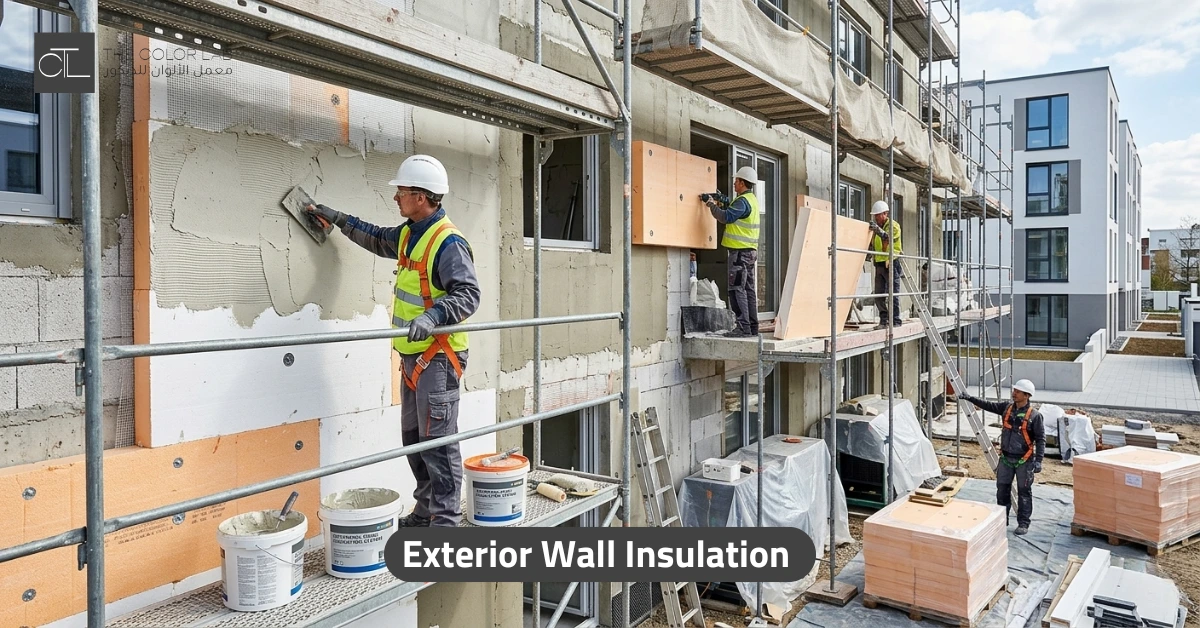
Exterior wall insulation refers to an insulation system installed on the outer side of a building envelope. Instead of placing insulation within interior wall cavities, the insulation material is applied directly to the exterior wall and protected with finishing layers that create a complete façade solution.
A typical external wall insulation system consists of several integrated components:
- Structural wall substrate.
- Insulation boards or panels.
- Mechanical fixings and adhesives.
- Reinforcement layers.
- Decorative finishing system.
Together, these layers create a thermally insulated façade that improves building performance while maintaining architectural flexibility.
Unlike traditional wall assemblies, modern external thermal insulation system designs allow architects and developers to preserve interior space while significantly improving environmental performance. This makes them particularly attractive for luxury residential and commercial projects where every square meter matters.
How It Works
The primary purpose of exterior wall insulation is reducing heat transfer through the building envelope. During hot seasons, insulation helps limit heat penetration from outside environments, while in cooler conditions it reduces energy loss from conditioned indoor spaces.
This process directly improves thermal performance by creating a continuous protective layer around the structure. As a result, indoor temperatures remain more stable, mechanical systems work more efficiently, and overall energy consumption decreases.
An effective insulation system contributes to:
- Reduced cooling costs.
- Improved occupant comfort.
- Enhanced energy efficient operation.
- Better building envelope performance.
- Long-term sustainability goals.
For modern projects focused on durability and efficiency, insulation has become as important as selecting the right façade finish. In the same way designers evaluate types of flooring, decorative epoxy flooring, or sustainable Flooring solutions for interior performance, exterior systems require careful material selection to achieve lasting value.
When designed correctly, exterior wall insulation becomes a foundational element that supports both aesthetic excellence and operational efficiency throughout the life of the building.
Types of Exterior Wall Insulation Systems
Selecting the right insulation solution depends on project requirements, climate conditions, design objectives, and performance expectations. Today’s market offers several advanced systems, each with distinct advantages.
EPS Exterior Wall Insulation
One of the most widely used solutions is EPS wall insulation. Expanded Polystyrene (EPS) boards are lightweight, easy to install, and highly cost-effective for residential and commercial developments.
Key benefits include:
- Excellent thermal insulation performance.
- Lightweight installation process.
- Competitive project costs.
- Reliable energy saving potential.
Many developers choose EPS systems when balancing performance, budget, and construction efficiency.
XPS Insulation Boards Exterior Walls
For projects exposed to moisture or challenging environmental conditions, XPS insulation boards exterior walls applications provide additional protection.
XPS boards offer:
- Superior moisture resistance.
- High compressive strength.
- Long service life.
- Consistent thermal performance.
These systems are frequently specified for foundations, podium levels, and high-performance façades where durability is a priority.
Mineral Wool / Rock Wool Systems
When fire safety becomes a major consideration, mineral wool systems are often the preferred solution.
Rock wool exterior insulation provides:
- Outstanding fire resistance.
- Enhanced acoustic performance.
- Vapor permeability.
- Long-term dimensional stability.
Because mineral wool is non-combustible, it plays an important role in projects that require strict compliance with fire safety regulations and modern building standards.
Polyurethane Exterior Wall Insulation
For projects demanding exceptional thermal efficiency, polyurethane wall insulation systems deliver impressive results.
Polyurethane solutions are known for:
- High insulation value.
- Reduced wall thickness requirements.
- Excellent thermal control.
- Adaptability through spray foam applications.
This makes them attractive for buildings where maximizing performance within limited space is essential.
Exterior Wall Insulation Panels
Modern construction increasingly relies on prefabricated wall insulation panels that simplify installation and improve quality control.
Advantages include:
- Faster project execution.
- Consistent manufacturing standards.
- Reduced on-site labor.
- Improved construction efficiency.
Many premium developments now incorporate these systems as part of comprehensive façade strategies and advanced external wall insulation system solutions.
Materials Used in Exterior Insulation Systems
The effectiveness of any exterior wall insulation solution depends heavily on the quality and suitability of the materials used throughout the system.
Insulation Materials Overview
A wide range of insulation material options is available for modern construction projects. Common building exterior insulation materials include:
- EPS boards.
- XPS boards.
- Mineral wool.
- Polyurethane foam.
- Composite insulation panels.
Each material offers different levels of thermal efficiency, moisture resistance, durability, and fire performance.
Choosing the correct insulation product requires evaluating environmental exposure, structural requirements, maintenance expectations, and long-term project goals.
Best Exterior Wall Insulation Materials
The best wall insulation materials are not always the same for every building. Material selection should align with the project’s performance objectives.
For example:
- EPS provides affordability and efficiency.
- XPS offers enhanced moisture protection.
- Mineral wool delivers exceptional fire resistance.
- Polyurethane achieves high thermal efficiency with reduced thickness.
A successful insulation strategy balances thermal performance, sustainability, and lifecycle value rather than focusing solely on initial cost.
Insulated Exterior Wall Cladding
Modern façade design increasingly combines insulation with architectural finishes through insulated exterior wall cladding systems.
These integrated solutions offer both decorative and functional advantages by improving energy efficiency while enhancing the building’s visual identity.
At The Color Lab, façade planning often extends beyond insulation alone. Materials such as lime plaster, premium coatings, and contemporary architectural finishes can be integrated seamlessly with insulation systems to create elegant, high-performance exteriors.
This holistic approach ensures that aesthetics and performance work together, delivering buildings that are visually striking, durable, and built for long-term success.
Performance Benefits
The growing demand for exterior wall insulation is driven by more than energy savings alone. Modern insulation systems deliver measurable improvements in comfort, safety, sustainability, and overall building performance.
Energy Efficiency & Saving
One of the most significant advantages of exterior wall insulation is its ability to improve energy efficiency throughout the building lifecycle.
By minimizing unwanted heat transfer, insulation systems help reduce the workload on HVAC equipment, resulting in:
- Lower energy consumption.
- Reduced cooling costs.
- Improved indoor comfort.
- More predictable operating expenses.
For developers and property owners, energy efficient wall insulation contributes directly to long-term operational savings while supporting sustainability targets.
Thermal Performance Improvement
A properly designed exterior wall insulation system creates a continuous thermal barrier around the building envelope.
This improves thermal performance by:
- Reducing heat gain during hot weather.
- Supporting temperature regulation.
- Eliminating thermal weak points.
- Enhancing occupant comfort.
As a result, indoor environments remain more stable throughout the year, even in regions with demanding climate conditions.
Fire Safety & Resistance
Fire protection remains a critical consideration in modern construction.
Many insulation systems are designed to meet strict fire safety requirements and comply with current building codes. Materials such as mineral wool provide excellent fire resistance while maintaining thermal performance and durability.
When combined with professionally engineered façade assemblies, these systems contribute to safer and more resilient buildings.
For projects requiring advanced protection, specialized fire safety insulation solutions can be incorporated into the overall façade design strategy.
Environmental Impact
Sustainable construction is no longer a trend, it is an industry expectation.
Because wall insulation helps reduce energy consumption, it also contributes to reducing carbon emissions associated with building operations.
Environmental benefits include:
- Lower carbon footprint.
- Reduced energy demand.
- Improved building sustainability ratings.
- Support for green construction initiatives.
By improving efficiency over decades of operation, insulation systems provide lasting environmental value that extends far beyond the initial installation.
Installation & Technical Considerations
Even the highest-performing insulation material can underperform if installation standards are not properly followed.
Exterior Wall Insulation Installation
Successful wall insulation projects begin with careful planning and preparation.
The installation process generally includes:
- Surface assessment and preparation.
- Installation of insulation boards or panels.
- Mechanical fixing and adhesive application.
- Reinforcement layer placement.
- Finishing system application.
Attention to detail during every stage ensures long-term durability and optimal thermal performance.
Thickness & Design Factors
Selecting the correct exterior insulation thickness requires balancing performance objectives, design requirements, and local climate conditions.
Factors that influence specification include:
- Building type.
- Environmental exposure.
- Energy efficiency targets.
- Structural limitations.
- Local regulations.
The ideal solution should maximize thermal efficiency while maintaining architectural flexibility and façade aesthetics.
Building Codes & Compliance
Modern insulation systems must comply with relevant building codes, thermal standards, and safety regulations.
Compliance considerations often include:
- Fire safety requirements.
- Structural performance standards.
- Moisture management criteria.
- Energy efficiency regulations.
Working with experienced specialists helps ensure that every insulation system is designed and installed according to project-specific technical requirements.
In the same way professionals carefully evaluate types of resin flooring or other high-performance construction materials, insulation specifications should be based on performance data, compliance standards, and long-term reliability rather than short-term cost considerations.
Cost & Long-Term Value
Costs depend on material type, building size, and installation requirements.
Long-Term Benefits
- Lower energy bills.
- Reduced maintenance.
- Improved durability.
- Better property value.
Cost vs Performance Analysis
The best systems balance performance, safety, durability, and long-term return on investment.
Why Professional Installation Matters
Importance of Expertise
Professional installation helps prevent thermal bridging and ensures reliable performance.
Role of Luxury Fit-Out Companies
Experienced specialists deliver accurate execution, premium finishing quality, and seamless façade integration.
Building Better, Smarter Façades with The Color Lab
At The Color Lab, we deliver advanced façade and insulation solutions that combine performance, durability, and refined design. Contact our team today to discuss the right solution for your next project.
Clay Wall Paint: 7 Natural Finishes | The Color Lab - TCL
[…] same principle applies across a complete project. Whether reviewing types of resin flooring, exterior wall insulation or other interior materials, performance and lifecycle should guide the […]
Clay Stone Texture: 5 Natural Finishes | The Color Lab - TCL
[…] complement concepts inspired by rammed earth Saudi Arabia, while technical considerations such as exterior wall insulation should be addressed as part of the wider wall […]
Wall Finishing Materials | Luxury Finishes | The Color Lab - TCL
[…] Exterior wall insulation materials demand additional consideration for weather, moisture, UV exposure and substrate compatibility. […]