


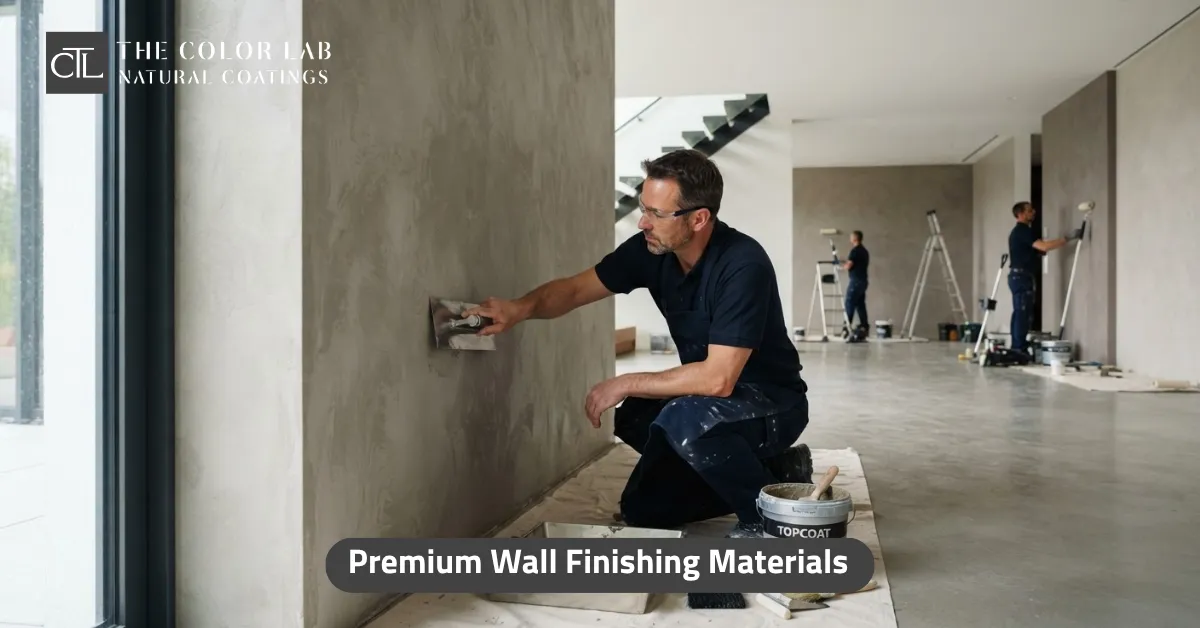
Wall Finishing Materials: Types, Finishes & Design Ideas
A wall can define the entire mood of a space.
The right wall finishing materials can bring:
- Rich texture and visual depth.
- Refined colour and tonal variation.
- Better durability and easier maintenance.
- A stronger connection between architecture and materials.
From decorative plaster and clay to microcement, stone and wall panels, the possibilities are extensive.
For architects and interior designers, interior wall finishing materials are selected around the character and requirements of the space.
Exterior wall insulation materials demand additional consideration for weather, moisture, UV exposure and substrate compatibility.
The result should be more than a beautiful surface. It should be a finish that feels intentional, performs well and belongs naturally within the wider design.
What Are Wall Finishing Materials?
Wall finishing materials are surface materials and systems used to complete and enhance walls after the basic construction stage.
They can add colour, texture and character while contributing to durability and maintenance.
Common categories include:
- Paint and decorative coatings.
- Plaster and decorative finishes.
- Clay and mineral finishes.
- Microcement.
- Stone and cladding.
- Wall panels and timber.
Interior Wall Finishing Materials vs Exterior Wall Finishing Materials
The same finish does not automatically work everywhere. The environment, substrate and expected performance should always guide the specification.
Interior Wall Finishing Materials
For interiors, interior wall finishing materials are often selected around:
- Visual character and texture.
- Colour and lighting interaction.
- Cleaning and washability.
- Indoor air considerations.
- Design flexibility.
- Long-term maintenance.
A textured surface may look completely different under soft daylight or directional lighting, making the lighting plan an important part of the material decision.
Exterior Wall Finishing Materials
Exterior wall finishing materials face more demanding conditions, including:
- Sun and UV exposure.
- Moisture and weather.
- Temperature changes.
- Surface movement.
- Durability requirements.
- Substrate compatibility.
- Ongoing maintenance.
A finish designed for interiors should never be assumed suitable for external use.
Product specifications, application requirements and local environmental conditions should be reviewed before approval.
For projects where performance matters as much as appearance, the finish should be specified as part of the complete wall system rather than chosen as an isolated decorative layer.
Wall Finish Types: Which Material Is Right for Your Project?
The right finish should support the project’s design language, performance needs and maintenance expectations.
Different wall finish types create very different architectural effects.
Some of the most considered options include:
- Paint finishes: flexible, clean and colour-focused.
- Decorative plaster: adds movement, depth and handcrafted character.
- Clay wall finishes: soft, earthy and naturally textured.
- Microcement wall finish: seamless and contemporary, with minimal visual interruption.
- Stone wall finish: brings permanence, texture and natural variation.
- Wall panels: introduce pattern, rhythm and architectural detail.
- Wood wall panels: add warmth and a tactile natural quality.
- Wall cladding materials: suitable for distinctive interior or exterior applications.
- Mineral wall finish: offers a material-led, matte appearance.
- Lime plaster: combines mineral character with a timeless architectural feel.
The best selection depends on how the material will look, perform and interact with the rest of the project.
Decorative Wall Finishes for Luxury Interiors
Luxury is often found in the details.
A carefully specified surface can give an interior a sense of depth that standard paint simply cannot achieve.
Decorative wall finishes allow designers to work with:
- Subtle tonal variation.
- Tactile texture.
- Hand-finished character.
- Material depth.
- Feature walls.
- Light and shadow.
The beauty is in the variation. Rather than looking perfectly uniform, a crafted finish can create movement across the wall while remaining refined and controlled.
Decorative Plaster
Decorative plaster is particularly versatile. Different application techniques can create soft movement, layered textures or more expressive surfaces. It works beautifully across both contemporary and traditional interiors, especially when used on feature walls.
Venetian Plaster
For a more polished expression, Venetian plaster creates a smooth surface with visual depth and subtle tonal variation.
Its refined appearance makes it a natural choice for luxury residences, hotel lobbies and sophisticated hospitality spaces.
At The Color Lab, the focus is on finishes that feel considered rather than excessive, surfaces designed to complement the architecture, lighting and wider material palette.
Clay Wall Finishes & Natural Wall Finishes
There is a growing appreciation for materials that feel connected to nature.
Clay wall finishes bring that quality through earthy colour, soft texture and a calm, matte appearance.
Clay Wall Finishes
Clay-based surfaces work especially well in:
- Warm, earth-inspired interiors
- Feature walls
- Natural and minimalist concepts
- Spaces using timber, stone and natural textiles
A carefully selected clay wall paint can also introduce subtle colour while keeping the surface visually soft and understated.
Clay Plaster
Clay plaster offers a more material-focused expression, with natural variation and tactile character. Depending on the selected system, it can also provide vapour permeability, making it particularly interesting for certain interior applications.
The Color Lab has its own factory in Riyadh, where clay plaster and lime plaster are manufactured for projects seeking distinctive, natural surfaces.
Natural Wall Finishes
Natural wall finishes can also include lime, mineral materials and natural pigments. Their understated character pairs beautifully with sustainable wall materials and architectural concepts inspired by materials such as rammed earth Saudi Arabia.
Microcement Wall Finish for Modern Interiors
A microcement wall finish brings a clean, continuous look to contemporary spaces.
Its minimal visual interruption makes it especially appealing when the design calls for calm surfaces and a cohesive material palette.
It can work beautifully across:
- Minimalist living spaces.
- Modern kitchens.
- Bathrooms with a suitable system.
- Commercial interiors.
- Contemporary hospitality projects.
One of its strongest design qualities is continuity. When coordinated with microcement flooring, the walls and floors can read as one connected material language rather than separate surfaces.
For designers working on refined contemporary interiors, this approach can create a quiet backdrop for furniture, lighting and architectural details without competing for attention.
As with any finish, suitability depends on the selected product, substrate, preparation and intended environment. Technical specifications should always be reviewed before application.
Stone Wall Finish & Wall Cladding Materials
Stone brings a sense of permanence to an interior.
A well-selected stone wall finish can add natural texture, colour variation and a strong architectural presence without overwhelming the space.
It can be used for:
- Feature walls.
- Hotel and hospitality interiors.
- Reception areas.
- Residential living spaces.
- Selected exterior applications.
The choice can range from natural stone to stone-inspired surfaces, depending on the project’s aesthetic and performance requirements.
Wall cladding materials offer an even wider palette. Stone, timber, metal and composite systems can all create distinctive architectural surfaces, whether used across an interior feature or as part of an exterior envelope.
For a cohesive specification, these materials should be considered alongside interior finishing materials, flooring, lighting and architectural details rather than selected independently.
Wall Panels & Wood Wall Panels
Panels can bring structure and rhythm to a wall while giving designers greater control over pattern, proportion and material expression.
Wall Panels
Modern wall panels can take many forms, including:
- Decorative and 3D surfaces.
- Acoustic panels.
- Large-format systems.
- Patterned architectural panels.
- Bespoke commercial applications.
They can define reception areas, corridors, retail spaces or feature walls without relying on heavy ornamentation.
Wood Wall Panels
Wood wall panels introduce warmth and a natural tactile quality. Timber and veneer options can complement:
- Luxury residential interiors.
- Hotel and hospitality spaces.
- Offices and meeting areas.
- Reception and lounge spaces.
Wood can also contribute to acoustic considerations when the selected system is designed for that purpose.
The strongest results come from coordinating panels with flooring, furniture, lighting and other wall finishing materials, allowing every surface to feel part of the same design story.
Paint Finishes & Mineral Wall Finish
Paint finishes remain a versatile choice when colour consistency, easy maintenance and a clean appearance are priorities.
Designers can choose from:
- Matte and low-sheen finishes.
- Satin surfaces.
- Washable options.
- Carefully coordinated colour palettes.
For a more natural expression, a mineral wall finish can add subtle texture, earthy colour and a soft matte character.
The right specification depends on the project’s lighting, usage and maintenance needs.
Even a simple surface can feel refined when its colour and application are carefully considered.
Lime Plaster & Natural Mineral Finishes
Lime plaster brings a timeless mineral character to contemporary interiors while retaining a connection to traditional architectural finishes.
Its appeal comes from its:
- Natural, softly textured appearance.
- Subtle colour variation.
- Mineral character.
- Ability to suit both classic and modern concepts.
Depending on the selected system, lime-based finishes may offer breathability and other performance characteristics.
These should always be confirmed against the product specification and substrate.
At The Color Lab, lime plaster is manufactured in the company’s own Riyadh factory, supporting projects that require carefully developed natural finishes with a distinctive architectural character.
Eco-Friendly Wall Finishes for Sustainable Interiors
Sustainability should be considered through the full material lifecycle, not simply a product label.
Eco-friendly wall finishes may include clay, lime and mineral-based options, as well as low-VOC formulations.
When comparing wall finishing materials, professionals can consider:
- Material composition and sourcing.
- VOC content.
- Expected durability.
- Maintenance requirements.
- Product lifecycle.
- Available environmental certifications.
The right choice balances environmental considerations with the project’s aesthetic and technical requirements.
How to Choose the Right Wall Finish
Choose based on five essentials:
- Design: Match the architectural style.
- Performance: Consider durability, moisture and maintenance.
- Substrate: Check compatibility before specification.
- Lighting: Test how texture responds to light.
- Material palette: Coordinate walls with flooring, timber, stone and furniture.
Why Professional Specification Matters
The Color Lab supports architects and designers with interior finishing materials, samples, colour coordination, technical specification and installation. Its Riyadh factory also produces clay and lime plaster for carefully specified projects.
Choose the Right Wall Finish for Your Project
Looking for premium wall finishing materials? The Color Lab helps create distinctive residential, hospitality and commercial interiors through carefully selected finishes and complete fit-out solutions.
Request Finish Samples | Discuss Your Project